
The Difference Between a Generalist and a Specialist Attorney

Navigating the legal landscape can be one of life’s most challenging experiences. When faced with complex legal issues, particularly in high-stakes areas such as criminal defense or intricate tax disputes, the choice of legal representation can significantly impact the outcome. We often assume that any lawyer can handle our case. Still, the truth is that the legal world is vast and deeply specialized, making specialized criminal defense representation crucial for those facing serious charges.
This comprehensive guide aims to explain the concept of specialized legal representation. We will explore what sets a certified legal specialist apart, the profound benefits they bring to your case, and crucially, when their unique expertise becomes not just an advantage, but an absolute necessity. Understanding the value of in-depth, focused knowledge is crucial to safeguarding your rights, freedom, and financial well-being.
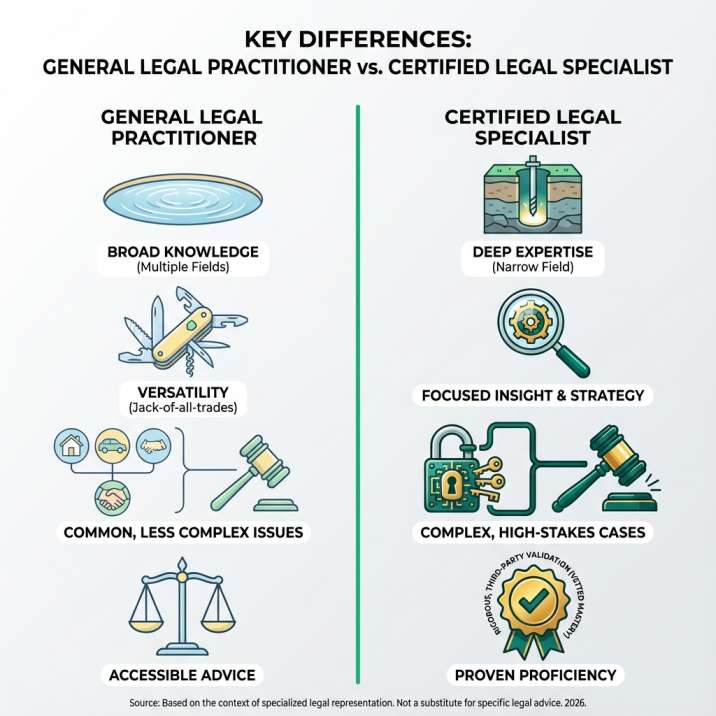
In the legal profession, as in medicine, there’s a significant distinction between a general practitioner and a specialist. A general practitioner, or generalist attorney, possesses a broad understanding of various legal fields. They might handle divorces one day, a simple contract dispute the next, and perhaps a misdemeanor traffic case the day after. Their strength lies in their versatility and ability to address a wide range of everyday legal needs. They are the “jack-of-all-trades” of the legal world, offering accessible legal advice for less complex issues.
However, when a legal matter involves intricate details, requires a profound understanding of specific statutes, or carries exceptionally high stakes, a generalist’s broad knowledge may not be sufficient. This is where the specialist attorney, the “master of one,” becomes invaluable. A specialist dedicates their practice to a narrow field of law, developing deep expertise and a nuanced understanding that generalists cannot match. They spend their careers immersed in the intricacies of their chosen area, staying abreast of every subtle shift in legislation, precedent, and procedural nuances. This focused approach enables them to provide a level of insight and strategic planning that is crucial for complex cases.
What is a Certified Legal Specialist?
A certified legal specialist is an attorney who has gone above and beyond the standard requirements for practicing law to demonstrate exceptional proficiency in a particular area. This designation signifies more than just an attorney’s self-proclaimed expertise; it represents a rigorous, third-party validation of their skills and knowledge. This process is often referred to as “board certification” because it is overseen by a state’s bar association or an independent board of certification.
The journey to becoming a certified legal specialist involves meeting stringent criteria designed to ensure a high level of vetted expertise. These standards are typically established and maintained by state bar organizations, such as the State Bar of California, or by programs accredited by national bodies, including the American Bar Association (ABA). The ABA Standing Committee on Specialization, for instance, accredits 19 specialty certification programs offered by eight different private organizations, ensuring that these programs meet national benchmarks for quality and rigor. This accreditation and state bar approval process guarantees that a certified specialist has not only practiced extensively in their field but has also proven their mastery through objective measures.
How Does an Attorney Become Certified?
The path to becoming a certified legal specialist is demanding and multi-faceted, designed to distinguish attorneys who possess truly exceptional knowledge and experience. While specific requirements can vary slightly by state and specialty, the core components generally include:
- Written Examination: Candidates must pass a comprehensive written examination specific to their chosen specialty area. This exam tests their in-depth knowledge of the relevant laws, procedures, and ethical considerations.
- Years of Practice: Attorneys are typically required to have practiced law for a significant period, often five years or more, before they can even apply for specialization. For example, to become a certified specialist in California, attorneys must have practiced law for a minimum of five years.
- Substantial Involvement in Specialty: A significant portion of an attorney’s practice must be dedicated to the specialty area. In California, this means at least 25% of their legal work must be in that specific field. This ensures that the attorney has hands-on, consistent experience with the types of cases and issues relevant to the specialization.
- Peer Reviews: Candidates must demonstrate a positive professional reputation. This often involves obtaining favorable evaluations from other attorneys and judges who are familiar with their work in the specialty area. These peer reviews help to confirm the attorney’s competence, ethics, and professionalism.
- Continuing Legal Education (CLE): Specialists are required to complete continuing education beyond the general requirements for all licensed attorneys. This ensures they remain current with the latest developments, changes in legislation, and emerging trends within their specialized field. For instance, California specialists are required to complete 36 hours of LSCLE every three years.
These rigorous standards ensure that when you engage a certified legal specialist, you are working with an attorney who has not only dedicated their career to a specific area but has also had their expertise validated by their peers and governing bodies.
Key Benefits of Hiring a Certified Legal Specialist

When facing a complex legal challenge, the decision to hire a certified legal specialist can significantly impact the outcome. Their focused expertise offers distinct advantages over that of a general practitioner, providing a higher degree of confidence and often leading to more favorable outcomes.
In-Depth Knowledge and Experience
A certified legal specialist possesses a nuanced understanding of their specific practice area that a generalist cannot cultivate. They are immersed daily in the intricacies of their chosen field, allowing them to develop a profound grasp of the law, its interpretations, and its practical applications. This deep expertise means they are better equipped to:
- Handle Complex Cases: They can steer the most convoluted legal scenarios, identifying subtle details and potential pitfalls that someone with less specialized experience might overlook. This is particularly vital in high-stakes litigation where every detail matters.
- Stay Up-to-Date with Legal Changes: Laws, regulations, and precedents are constantly evolving, particularly in specialized fields such as tax or criminal law. Specialists dedicate significant time to staying current, ensuring their strategies are always based on the most recent legal landscape.
- Provide Strategic Advantage: Their in-depth knowledge allows them to craft highly effective and creative legal strategies custom to the unique aspects of your case. They understand the typical tactics of opposing counsel and can anticipate moves, giving you a significant advantage.
- Offer Nuanced Understanding: Beyond just knowing the law, specialists understand the practical realities, common challenges, and typical outcomes within their niche. This allows for more realistic expectations and better preparation.
For example, John T. Floyd, who has been Board Certified in Criminal Law by the Texas Board of Legal Specialization since 2010, represents the elite 7% of expert board-certified lawyers. This level of specialization indicates a depth of knowledge crucial for serious criminal charges.
Efficiency and Better Outcomes
While the hourly rate of a specialist might sometimes be higher, their focused expertise often translates into greater efficiency and, ultimately, better outcomes, which can lead to lower long-term costs.
- Familiarity with Procedures: Specialists are intimately familiar with the specific court procedures, local rules, and administrative processes relevant to their area of law. This familiarity streamlines the legal process, reducing delays and potential errors.
- Established Relationships: Many specialists develop professional relationships with judges, prosecutors, and other legal professionals within their specialized court systems. While these relationships never compromise ethical standards, they can facilitate smoother negotiations and a better understanding of local practices.
- Reduced Research Time: Because they spend their careers in a specific field, specialists require less time to research fundamental legal principles or precedents, allowing them to focus more quickly on the unique aspects of your case.
- Potentially Lower Long-Term Costs: Their efficiency and ability to achieve more favorable results can prevent prolonged litigation, costly appeals, or severe penalties, saving you significant money and stress in the long run.
- Proven Results: Specialists often have a track record of success in their niche. For instance, the Neal Davis Law Firm has been named one of the Best Law Firms in America by U.S. News and World Report and Best Lawyers, with Neal Davis himself recognized as a Best Lawyer in America (2015-2022). Such accolades reflect their ability to deliver positive outcomes for clients.
Why specialized legal representation is awiset choice
Choosing specialized legal representation is a strategic decision that prioritizes your best interests. It offers several key benefits to consumers seeking legal services:
- Consumer Protection: Certification programs are designed to protect the public by ensuring that attorneys advertising as specialists have met rigorous, objective standards of competence and experience. This provides a level of assurance that a generalist designation cannot.
- Increased Confidence: Knowing that your attorney is a recognized expert in the specific area of law relevant to your case provides immense peace of mind. This confidence allows you to trust their advice and strategy, reducing anxiety during what is often a stressful period.
- Access to an Expert Network: Specialists often have a network of other highly skilled professionals—from expert witnesses to forensic accountants—who are also leaders in their respective niche fields. This network can be crucial for building a strong case.
- Navigating Specific Court Systems: For those in areas like Houston, specialized knowledge of local court systems, including the Harris County courts, can be a game-changer. A specialist understands the nuances of local judges, prosecutors, and administrative staff, which can be invaluable.
- Peace of Mind: Hiring a specialist allows you to focus on your life while knowing that your complex legal matter is in the most capable hands.
When is Specialized Legal Representation Crucial?

While a general practitioner can handle many legal matters, certain situations inherently demand the focused expertise of a certified legal specialist. These are typically cases where the stakes are exceptionally high, the legal framework is unusually complex, or the potential consequences are life-altering.
Complex Criminal Defense Cases
When your freedom, reputation, and future are on the line, the choice of your criminal defense attorney is paramount. High-stakes criminal charges require a deep understanding of both the law and local court procedures. Navigating the complexities of the Houston criminal justice system is best handled by an attorney with specialized criminal defense representation. Their expertise can be the difference between conviction and acquittal, or between a harsh sentence and a more favorable outcome.
Here is a list of criminal cases where a specialist is vital:
- Federal Crimes: Charges brought by the federal government, such as Those Involving Federal Crimes, often follow different rules of procedure, sentencing guidelines, and investigative tactics than state crimes. A specialist in federal criminal defense will have experience with federal agencies, federal courts, and the specific nuances of federal statutes.
- Felony DWI: While any DWI Lawyer is necessary, a Felony DWI charge carries significantly harsher penalties than a misdemeanor. These cases might involve repeat offenses, accidents with serious injury, or even death. A specialist understands the complex scientific evidence often used (like blood alcohol tests) and the aggressive defense strategies required.
- Complex White-Collar Crimes: These offenses, such as Money Laundering, Bribery, or Racketeering (under RICO Law), often involve intricate financial transactions, extensive documentation, and can be prosecuted at both state and federal levels. A specialist will possess the financial acumen and legal expertise necessary to resolve these complex cases.
- Serious Violent Crimes: Charges like Murder/Manslaughter, Aggravated Assault, or Robbery carry severe penalties, including lengthy prison sentences. A specialist in Violent Crimes understands the forensic evidence, witness testimony, and intricate self-defense arguments often central to these cases.
- Sexual Assault Allegations: Sex Crimes, including Sexual Assault and Sexual Assault of a Child, are not only legally complex but also carry immense social stigma and registration requirements. A specialist will handle these sensitive cases with the necessary discretion and aggressive defense strategies, understanding the unique challenges of defending against such accusations. Other related charges, like Child Pornography, also fall into this category.
- Drug Crimes: From Drug Possession to Drug Trafficking or Drug Distribution, these cases often involve complex search and seizure issues, informant testimony, and forensic evidence. A specialist in Drug Crimes will be adept at challenging evidence and understanding the nuances of controlled substances.
- Other Specialized Criminal Areas: This includes cases such as Juvenile Crimes, Theft Crimes, Arson, Probation Violations, or seeking post-conviction relief, including orders of Non-Disclosure and Expunctions. Each of these areas has its own distinct legal framework and procedural requirements that benefit from specialized attention and consideration.
High-Stakes Tax Law Disputes
The U.S. tax code is a complex and constantly evolving structure, often changing and notoriously tricky to navigate. Disputes with the Internal Revenue Service (IRS) or state tax authorities can have severe financial consequences, potentially leading to substantial penalties, asset forfeiture, or even criminal charges. These situations demand a professional with specialized tax legal representation to protect your financial interests, ensure compliance, and mitigate potential damage.
Here are scenarios where a tax law specialist is indispensable:
- IRS Audits: Facing an IRS audit, particularly a complex one involving businesses or high-net-worth individuals, requires an attorney who understands the audit process, IRS procedures, and how to negotiate with auditors effectively.
- Tax Fraud Allegations: Accusations of tax fraud are grave, carrying both civil penalties and the potential for criminal prosecution. A specialist in tax fraud defense can steer through the complexities of intent, evidence, and the intersection of tax and criminal law.
- Business Tax Controversies: Businesses often encounter complex tax issues related to corporate structure, international transactions, payroll taxes, or sales tax. A specialist can provide strategic advice and representation to resolve these controversies efficiently.
- Estate Tax Planning: Planning for the transfer of significant wealth requires a thorough understanding of estate tax laws, trusts, and probate procedures. A specialist ensures that your estate plan minimizes tax liabilities and effectively fulfills your wishes.
- International Tax Issues: For individuals or businesses with international income, assets, or operations, international tax law presents a unique set of challenges. A specialist understands treaties, foreign tax credits, and reporting requirements to ensure compliance and avoid double taxation.
How to Find and Verify a Legal Specialist in Houston
Finding the right legal specialist is a critical step when facing complex legal challenges. It’s not enough to search online; you need to know how to identify and vet attorneys who genuinely possess the specialized expertise your case demands.
Using State and National Bar Association Resources
Official legal organizations are your best starting point for finding certified specialists. They maintain directories and uphold the standards for specialization.
- State Bar of Texas and Texas Board of Legal Specialization (TBLS): For those in Texas, the Texas Board of Legal Specialization (TBLS) is the primary authority for certifying legal specialists. The TBLS certifies attorneys in over 20 specific areas of law. You can search their directories to find attorneys who have met their rigorous standards.
- American Bar Association (ABA) Directory: The ABA plays a significant role in promoting and accrediting lawyer specialization programs across the country. While they don’t directly certify lawyers, their Standing Committee on Specialization accredits programs offered by various private organizations. Their website provides resources on finding legal help and information about ABA-accredited programs, which can help understand national standards and potentially identify specialists in other states or through national organizations.
- Lawyer Referral Services: Many state and local bar associations offer lawyer referral services. These services can often connect you with attorneys who practice in specific areas of law, and some may even highlight certified specialists.
Vetting a Potential Specialist for your case
Once you have a list of potential specialists, it’s crucial to vet them thoroughly to ensure they are the best fit for your specific needs.
- Verify Certification Status: Always confirm that the attorney’s specialization claim is legitimate and current. You can usually do this through the respective state bar’s website or the TBLS in Texas.
- Review Case Results: While past results don’t guarantee future outcomes, a specialist should be able to discuss their experience with cases similar to yours and provide examples of successful resolutions.
- Read Client Testimonials: Feedback from previous clients can offer insights into an attorney’s communication style, professionalism, and effectiveness.
- Ask About Experience in Your Specific Case Type: Even within a specialization, there can be sub-specialties. For example, a criminal law specialist might focus heavily on DWI cases, while another might specialize in federal white-collar defense. Ensure their specific experience aligns with your precise legal issue.
- Schedule a Consultation: Most specialists offer an initial consultation to discuss your needs. Use this opportunity to discuss your case in detail, ask about their approach, fees, and gauge your comfort level with them. This is also a good time to ask about their familiarity with the local courts, such as those in Harris County, if that’s where your case will be heard.
Understanding the standards for specialized legal representation
The designation of a legal specialist is not a one-time achievement; it requires ongoing commitment and adherence to high standards.
- Ongoing Requirements: Certified specialists must meet continuous requirements to maintain their status. This includes fulfilling additional continuing legal education (CLE) credits specific to their field, demonstrating continued substantial involvement in their specialty, and often undergoing periodic peer reviews.
- Recertification Process: Many certification programs require specialists to go through a recertification process every few years (e.g., every five years in California). This ensures that their expertise remains current and relevant.
- Commitment to Excellence: These ongoing requirements reflect a commitment to excellence and continuous learning, ensuring that certified specialists remain at the forefront of their fields.
- Varying Standards by State: The concept and standards of legal specialization can differ across different states or jurisdictions. While the ABA provides accreditation for programs, each state’s bar association sets its own rules or recognizes specific certifications. This means a “certified specialist” in one state might have met slightly different criteria than one in another. Always verify the particular standards of the jurisdiction in which you require legal assistance.
Frequently Asked Questions about Legal Specialization
What are the main areas of law for specialization in Texas?
The Texas Board of Legal Specialization (TBLS) certifies attorneys in over 20 specific areas, ensuring that consumers can find an expert to meet their particular needs. These include broad categories like Criminal Law, Family Law, Personal Injury Trial Law, and Estate Planning & Probate Law, as well as more niche fields such as Administrative Law, Appellate Law, Bankruptcy Law, Civil Appellate Law, Civil Trial Law, Consumer and Commercial Law, Construction Law, Criminal Appellate Law, Environmental Law, Health Law, Immigration and Nationality Law, Juvenile Law, Labor and Employment Law, Oil, Gas and Mineral Law, Real Estate Law, Tax Law, and Workers’ Compensation Law. This extensive list demonstrates the depth of specialization available to Texans.
Is a certified specialist more expensive than a general practitioner?
While a specialist’s hourly rate may indeed be higher than that of a general practitioner, their expertise and in-depth knowledge can often resolve complex cases more efficiently. This specialized expertise enables them to spend less time on foundational research and more time on strategic solutions, potentially saving money in the long run by avoiding prolonged litigation or unfavorable outcomes. Moreover, their expertise can prevent costly mistakes that a less experienced attorney might make, ultimately proving to be a more cost-effective choice for intricate legal matters.
How do I determine if my case is complex enough to be handled by a specialist?
If your case involves substantial financial assets, the potential for significant jail time, intricate legal statutes (like tax or federal law), or could have a life-altering impact, consulting with a specialist is highly recommended. Other indicators include cases that cross multiple legal disciplines, involve novel legal questions, or require extensive factual investigation and expert testimony. When in doubt, an initial consultation with a specialist can help you assess the complexity of your situation and determine if their focused expertise is warranted.
Leave a Reply