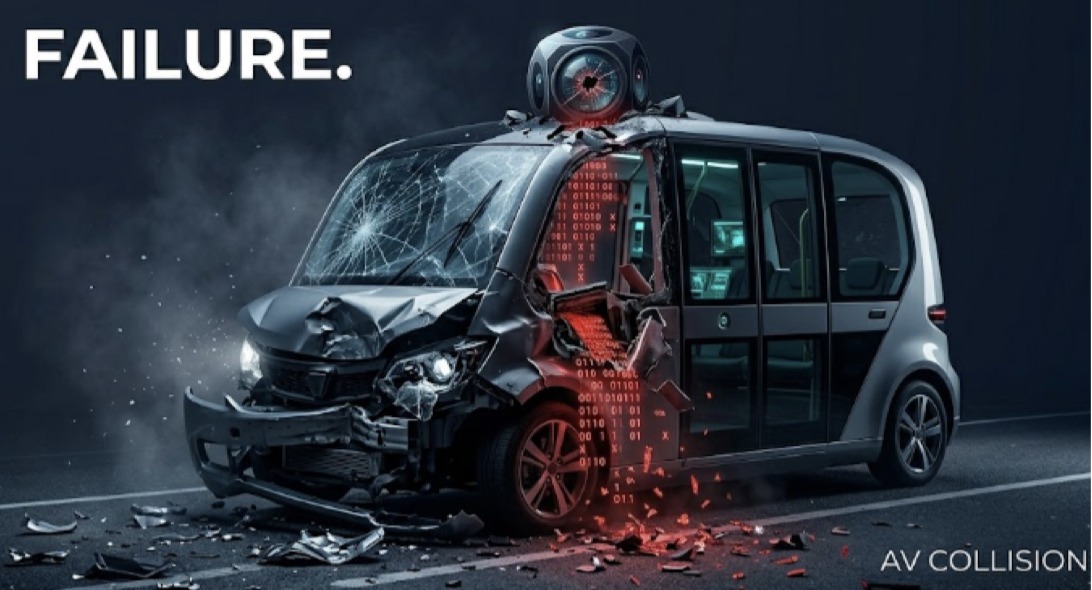
The dream of self-driving cars has moved from science fiction to everyday reality on public roads. Major cities like San Francisco and Los Angeles now serve as real-world testing grounds for passenger robotaxis and autonomous freight trucks. While this technology promises to reduce accidents caused by human distractions, the transition phase has introduced serious public safety risks. When an autonomous vehicle fails, the resulting collisions often lead to devastating physical harm, including traumatic brain injuries, spinal damage, and permanent disability.
Traditional personal injury law is built almost entirely on the concept of human fault. When an ordinary driver runs a red light or fails to yield, a police report easily establishes negligence. However, if a driverless vehicle strikes a pedestrian or collides with another car, there is no human operator behind the wheel to hold accountable. This fundamental shift leaves victims facing an incredibly complex legal path. For those who suffer life-altering harm, consulting with Riverside attorneys specializing in catastrophic injuries becomes essential to navigate these uncharted legal waters. The central challenge lies in moving away from standard traffic negligence and pivoting toward corporate product liability.
The Shift From Human Error to System Defect
In a standard injury lawsuit, a plaintiff must prove that another person failed to act with reasonable care. In accidents involving fully autonomous technology, the focus completely shifts from human behavior to software and hardware design. Instead of proving a driver was speeding or texting, injured parties must prove that the autonomous system itself was defective.
Product liability claims generally fall into three categories. Design defects occur when software fails to accurately detect a hazard, such as a pedestrian or an emergency vehicle. Manufacturing defects involve physical hardware failures, like a malfunctioning sensor. Finally, warning defects occur when marketing materials mislead consumers into over-relying on semi-autonomous systems, causing them to disengage from driving. Evaluating these claims requires courts to apply strict liability, holding a manufacturer responsible for a defective product regardless of intent.
The Regulatory Response and the Notice of Noncompliance
California regulators have recognized the unique challenges posed by driverless fleets and have recently updated the legal framework governing these vehicles. The state Department of Motor Vehicles finalized comprehensive new rules that alter how traffic violations are tracked and enforced. A major structural change allows law enforcement officers to issue a formal notice of autonomous vehicle noncompliance directly to the manufacturing company when a driverless car commits a moving violation.
This tracking system provides critical public records for civil litigation. If a company repeatedly receives notices for failing to yield, attorneys can use these records to establish a pattern of systemic product failure. Furthermore, updated regulations require manufacturers to submit extensive safety reports and share collision data with the state, ensuring that technology companies cannot easily hide operational failures.
Challenges in the Courtroom and Corporate Secrets
Litigating a catastrophic injury case against a massive tech corporation presents unprecedented procedural hurdles. The most significant obstacle is accessing the data stored within the vehicle’s computer systems. Unlike a standard car accident where eyewitness testimony and basic dashcam footage suffice, an autonomous vehicle lawsuit depends entirely on technical data discovery.
Plaintiffs must secure access to proprietary code, sensor logs, and computer vision data to prove exactly what the vehicle saw and decided in the milliseconds leading up to the crash. Tech companies routinely fight these requests by claiming their software code constitutes a protected trade secret. Overcoming these corporate defenses requires extensive resources and expert testimony from software engineers and forensic data analysts. Additionally, California’s pure comparative negligence system complicates matters when a jury must distribute fault among multiple entities, including the software developer, the hardware manufacturer, and the remote vehicle assistant.
Global Implications of California’s Legal Standards
Because California serves as the primary epicenter for autonomous vehicle deployment, the legal precedents established in its state courts will inevitably shape global policy. International regulators are closely watching how American courts manage liability for algorithmic errors. As the technology continues to mature, the decisions made by California judges and juries will provide the baseline blueprint for how the modern justice system balances technological innovation with the fundamental right to public safety.
Leave a Reply