

The Role of Statutes of Limitations in Personal Injury Law
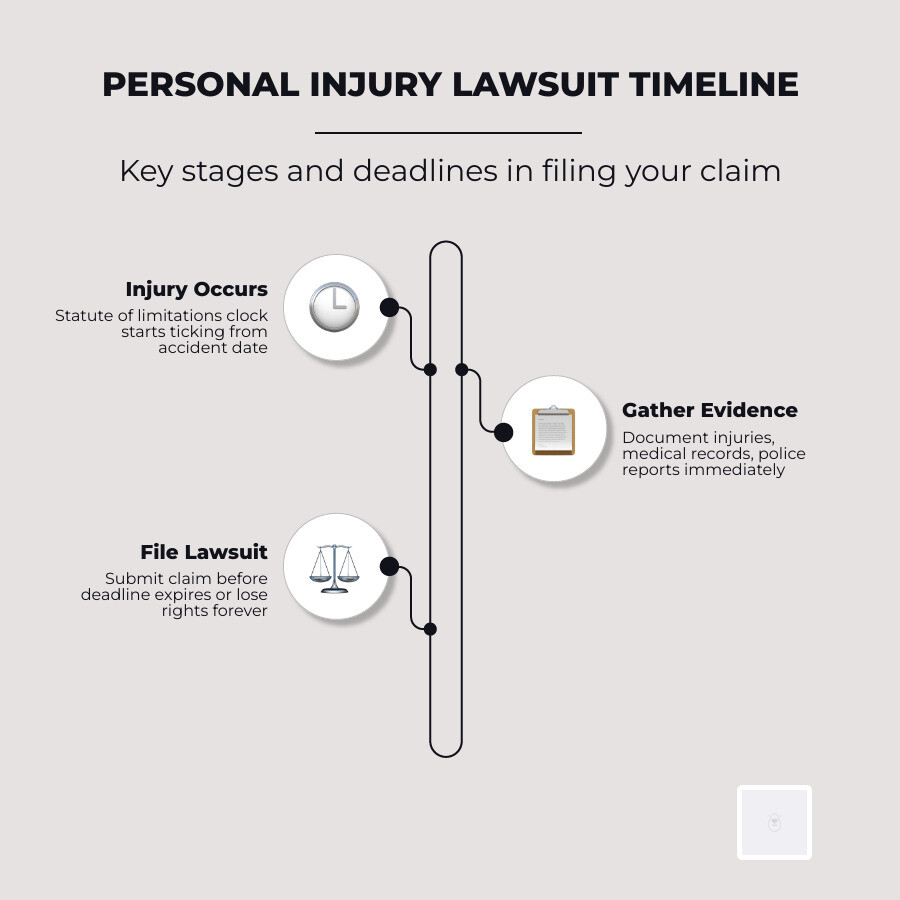
An unexpected injury can change your life in an instant. You might face pain, medical bills, and lost income. During this tough time, seeking justice can feel overwhelming. Many people wonder if they can get help. A key question is, “How long do I have to file a personal injury claim?”
This question points to a vital part of personal injury law: the filing period. These are strict legal deadlines. They decide if you can pursue compensation or not. Missing them means losing your right to sue.
In this guide, we will break down these crucial deadlines. We will cover what a “statute of limitations” means. We will explain how these periods start and how they can change. You will learn about state-specific rules and possible exceptions. We will also discuss the steps to protect your claim.
Our aim is to give you clear, actionable information. We want you to understand your legal rights. This is key to making smart choices after an injury. For more details on protecting your legal options, understanding True North injury law deadlines can be a valuable step.
At the heart of every personal injury claim lies a critical legal concept: the statute of limitations. This isn’t just a suggestion; it’s a firm legal deadline that dictates the maximum amount of time an injured party has to initiate a lawsuit after an injury or incident occurs. These laws are designed to ensure fairness and efficiency within the civil justice system.
The primary purpose of a statute of limitations is multifaceted. Firstly, it prevents the indefinite threat of legal action, allowing potential defendants to move forward without a perpetual cloud of litigation. Secondly, and perhaps most importantly for injured individuals, it encourages prompt resolution of claims. This ensures that cases are pursued while evidence is still fresh, witnesses’ memories are clear, and documentation remains accessible. Over time, evidence can degrade, disappear, or become difficult to obtain, making it challenging to build a strong case or for a court to render a fair judgment.
If an injured person fails to file their lawsuit within the specified timeframe, their case will almost certainly be dismissed by the court, regardless of the merits of their claim or the severity of their injuries. This outcome can be devastating, as it means losing the legal right to seek compensation for medical expenses, lost wages, pain, and suffering. Moreover, even before a lawsuit is filed, the looming deadline of the statute of limitations can significantly impact settlement negotiations. A defendant’s insurance company is less likely to offer a fair settlement if they know the injured party is close to missing their filing deadline, as their leverage diminishes considerably.
Understanding these legal deadlines is therefore paramount for anyone considering a personal injury claim. For instance, in New York, understanding the specific personal injury laws and deadlines to file a case is crucial, as these can vary significantly based on the type of injury and the parties involved. Similarly, the NYC Bar provides detailed information on the statute of limitations for personal injury in New York, highlighting the importance of state-specific knowledge.
How Personal Injury Law Defines the Discovery Rule
While the general rule is that the statute of limitations begins to run from the date of the injury-causing incident, personal injury law recognizes that not all injuries are immediately apparent. This is where the “discovery rule” comes into play. The discovery rule is an exception that can postpone the start of the statute of limitations clock, allowing it to begin when the injured person either discovers their injury or reasonably should have discovered it.
This rule is particularly relevant in cases involving latent injuries, where symptoms may not manifest for weeks, months, or even years after the initial exposure or incident. Common scenarios where the discovery rule is frequently applied include:
- Medical Malpractice: A surgical error might not be apparent until a patient experiences complications long after the procedure, or a misdiagnosis is only revealed much later by a second opinion.
- Toxic Exposure: Individuals exposed to harmful chemicals or substances may not develop illnesses like cancer until decades later.
- Defective Products: A faulty product might cause internal damage that goes unnoticed until severe health issues arise.
- Delayed Injuries: Whiplash from a car accident, for example, might not present its full severity until days or weeks after the collision.
The key to the discovery rule is the concept of “reasonable discovery.” It’s not enough for an injury to simply be discovered; the law asks whether a reasonable person in the same circumstances would have discovered the injury earlier. This often involves complex legal arguments and factual analysis. For example, Oklahoma’s personal injury laws and deadlines to file a case also incorporate provisions for delayed discovery, underscoring its widespread application across different jurisdictions. Understanding these nuances can significantly impact realistic personal injury case timelines, as the starting point for the clock can shift.
Protecting Your Rights Under Personal Injury Law
Immediately after an injury, your priority should be your health and safety. However, once you are stable, taking proactive steps to protect your potential personal injury claim is crucial. The actions you take (or fail to take) in the immediate aftermath can significantly impact the strength and viability of your case, especially when considering strict filing deadlines.
Here are essential steps we recommend to safeguard your rights:
- Seek Immediate Medical Attention: This is paramount for your health and creates an official record of your injuries. Even if you feel fine, some injuries have delayed symptoms. Medical documentation links your injuries directly to the incident.
- Document Everything:Photos and Videos: Capture the accident scene from multiple angles, damage to property, visible injuries, and any contributing factors (e.g., hazardous conditions, skid marks).
- Witness Information: Collect names, phone numbers, and email addresses of anyone who saw the incident.
- Detailed Notes: Write down everything you remember about the incident, including dates, times, locations, and any conversations you had with involved parties or authorities.
- Preserve Evidence: Do not discard damaged clothing, products, or other items related to the incident. These can serve as crucial physical evidence.
- Report the Incident: If it’s a car accident, file a police report. If it’s a slip and fall at a business, report it to management and get a copy of the incident report.
- Limit Communication with Insurers: While you should notify your own insurance company of the incident, be cautious about providing recorded statements or signing medical releases for the at-fault party’s insurer without legal counsel. They may try to use your words against you or minimize your claim.
- Consult a Personal Injury Attorney: This is perhaps the most critical step. An attorney can help you understand the specific filing deadlines applicable to your case, ensure all evidence is properly collected and preserved, and handle communications with insurance companies on your behalf. They can guide you through the complexities, ensuring you don’t inadvertently jeopardize your claim. For a comprehensive overview of what to track, refer to our personal injury claim checklist.
By taking these steps, you build a strong foundation for your claim and significantly improve your chances of securing the compensation you deserve within the necessary legal timeframes.
State-Specific Deadlines and Filing Requirements
The statute of limitations for personal injury claims is not uniform across the United States. Each state has the authority to set its own deadlines, leading to a patchwork of laws that can vary significantly. This means that the time you have to file a lawsuit depends entirely on where your injury occurred.
Generally, personal injury statutes of limitations can range from as little as one year to as many as six years. However, certain patterns emerge when we look at the states collectively:
- Two-Year Standard: A significant number of states, 28 to be precise, provide a two-year window for filing most personal injury claims. This is a common timeframe for car accidents, slip and falls, and other negligence-based cases.
- Three-Year Standard: Another substantial group, 12 states, allow three years for personal injury claims.
- Complex Variations: Five states have more intricate setups, where the statute of limitations might range from one to six years depending on the specific type of injury, the circumstances of the incident, or even the identity of the parties involved. For instance, some states might have a shorter period for intentional torts (like assault) compared to negligence claims.
To illustrate these variations, consider the following examples from different states:
- Texas: In Texas, the general statute of limitations for most personal injury cases, including car accidents and slip and falls, is two years from the date of the injury. For more detailed information, you can review the Texas Personal Injury Laws and Case Filing Deadline.
- Georgia: Georgia typically allows two years for most personal injury lawsuits, but this can differ for specific claims like defamation or loss of consortium. The Georgia Personal Injury Laws and Deadline to File a Case provides a comprehensive overview.
- Pennsylvania: Pennsylvania also generally imposes a two-year statute of limitations for most personal injury claims, but like other states, it has specific rules for certain types of cases and potential exceptions. Further details can be found regarding Pennsylvania Personal Injury Laws and Case Filing Deadlines.
This state-by-state variability underscores the critical importance of determining the specific laws applicable to your situation. What might be a valid claim in one state could be time-barred in another. Always verify the exact deadline for your jurisdiction and the specific type of personal injury claim you intend to pursue.
Exceptions and Tolling Provisions
While statutes of limitations are strict, the law recognizes certain circumstances where it would be unfair to hold an injured party to the standard deadline. These situations lead to “exceptions” or “tolling provisions” that can pause or extend the filing period. Tolling essentially means that the clock on the statute of limitations stops running for a certain period and then resumes once the specific condition that caused the tolling is resolved.
Common reasons for the tolling or extension of a statute of limitations include:
- Minors: If the injured person is a minor (under the age of 18), the statute of limitations is often tolled until they reach the age of majority. This means the clock typically doesn’t start running until their 18th birthday, giving them a full statutory period (e.g., two or three years) from that point to file a lawsuit. This exception acknowledges that minors lack the legal capacity to pursue a claim on their own.
- Mental Incapacity: Similar to minors, individuals who are deemed mentally incapacitated or legally incompetent at the time of the injury may have their statute of limitations tolled. The deadline would then begin once their mental capacity is restored, or a legal guardian is appointed to act on their behalf.
- Defendant’s Absence or Concealment: If the at-fault party leaves the state or actively conceals their identity or location, making it impossible to serve them with a lawsuit, the statute of limitations may be tolled until they return or are found. This prevents defendants from evading justice by simply disappearing.
- Fraudulent Concealment: If the defendant actively and fraudulently conceals their wrongdoing or the existence of the injury, the statute of limitations may be extended or tolled until the victim discovers the fraud. This is common in cases where a responsible party attempts to hide evidence of their negligence.
The specific rules for these exceptions and tolling provisions vary by state and the type of claim. For instance, in Utah, understanding how long you have to file a personal injury claim involves knowing these potential extensions. Similarly, the statute of limitations for personal injury in Utah outlines specific conditions under which deadlines might be extended. Even for specific types of claims, such as car accidents, understanding the statute of limitations for car accidents in Utah requires a careful review of these exceptions. Relying on these exceptions without professional legal advice can be risky, as their application is often complex and subject to judicial interpretation.
Navigating Claims Against Government Entities
Suing a government entity, whether it’s a local municipality, a state agency, or the federal government, presents a unique set of challenges and much stricter deadlines compared to claims against private individuals or businesses. This is primarily due to the legal doctrine of “sovereign immunity,” which historically protected governments from lawsuits. While this immunity has been largely waived over time, governments often retain significant protections and procedural requirements that must be meticulously followed.
The most critical difference when pursuing a claim against a government entity is the requirement to file a “notice of claim” or an “administrative claim” before you can even file a lawsuit. These notice periods are almost always much shorter than the standard personal injury statute of limitations. For example, while a typical personal injury claim might have a two- or three-year statute of limitations, the deadline to file a notice of claim against a government entity could be as short as 30 days, 90 days, or six months from the date of the injury.
These notices are not merely formalities; they are mandatory administrative requirements. They typically require specific information, including the date, time, and location of the incident, a description of the injury, and the amount of damages sought. Failure to file this notice within the precise, often very short, deadline will almost certainly result in the permanent bar of your claim, regardless of how severe your injuries are or how clear the government’s fault.
Furthermore, even after filing a timely notice of claim, there are usually specific waiting periods before a lawsuit can be filed, allowing the government agency time to investigate and respond. If the claim is denied, or a certain period passes without a response, then the injured party may proceed with a lawsuit, which will also have its own, often shorter, statute of limitations.
Government claims can also be subject to damage caps, limiting the amount of compensation an injured party can receive, even if their actual damages are much higher. These caps vary widely depending on the jurisdiction and the specific government entity involved.
Given these complexities and unforgiving deadlines, understanding the filing deadline for personal injury claims against government bodies is paramount. The intricacies of these rules make it exceptionally easy to make mistakes filing personal injury documents, which can be fatal to a claim. Therefore, if you believe a government entity is responsible for your injury, it is imperative to seek legal counsel immediately to ensure all proper procedures and deadlines are met.
Frequently Asked Questions about Filing Periods
The concept of a personal injury filing period, or statute of limitations, often raises many questions for individuals navigating the aftermath of an injury. We understand that deciphering legal jargon and strict deadlines can be daunting. Here, we address some of the most common questions we encounter regarding these crucial timeframes and the steps you should consider taking.
What happens if I miss the statute of limitations deadline?
Missing the statute of limitations deadline for your personal injury claim is one of the most critical errors an injured person can make. The consequences are severe and almost always irreversible. If you file your lawsuit even one day after the statutory period has expired, the court will, in nearly all circumstances, dismiss your case. This dismissal means you permanently lose your legal right to pursue compensation for your injuries, medical bills, lost wages, and pain and suffering, no matter how strong your evidence or how clear the defendant’s liability.
The court will not typically make exceptions for the severity of your injuries, your personal hardship, or your lack of awareness of the deadline. The statute of limitations is a firm legal barrier. Once it passes, you lose all negotiation leverage with insurance companies, as they know you can no longer legally compel them to pay. This is why understanding the specific deadlines, such as how long you have to file a personal injury lawsuit in Texas, is absolutely essential to protect your right to recovery.
Why is it important to consult a personal injury attorney early?
Consulting a personal injury attorney early in the process, ideally as soon as possible after your injury, is one of the most beneficial steps you can take to protect your claim. An experienced attorney brings several critical advantages:
- Accurate Deadline Calculation: They can precisely determine the applicable statute of limitations for your specific case, considering the type of injury, the parties involved, and any potential tolling provisions or exceptions.
- Evidence Preservation: Attorneys can act quickly to gather and preserve crucial evidence that might otherwise be lost, such as accident scene data, witness statements, and surveillance footage.
- Expert Communication with Insurers: They can handle all communications with insurance companies, protecting you from common tactics used to minimize payouts or elicit damaging statements.
- Comprehensive Damage Assessment: An attorney can help you accurately assess all your damages, including future medical costs, lost earning capacity, and non-economic damages like pain and suffering, ensuring you seek full and fair compensation.
- Navigating Complexities: Personal injury law is complex, with nuances that vary by state and case type. An attorney can guide you through these intricacies, ensuring all legal requirements are met.
The sooner an attorney is involved, the more thoroughly they can investigate, prepare, and negotiate your case, significantly increasing your chances of a successful outcome. This proactive approach is vital, as highlighted by resources explaining how long you have to file a personal injury claim in Utah, emphasizing the benefits of early legal intervention.
How does the statute of limitations vary for different types of personal injury claims?
The statute of limitations is not a one-size-fits-all rule; it can vary significantly depending on the specific type of personal injury claim you have. While many states have a general statute for most negligence-based injuries, certain categories of claims often have their own unique deadlines:
- Car Accidents: These typically fall under the general personal injury statute of limitations, which is often two or three years in many states.
- Medical Malpractice: Claims against healthcare providers for negligence often have shorter or more complex statutes of limitations. These might include a “discovery rule” that starts the clock when the malpractice is discovered, but also a “statute of repose” that sets an absolute outer limit, regardless of discovery.
- Wrongful Death: When an injury results in death, a wrongful death claim has its own statute of limitations, which usually begins from the date of death, not the date of the initial injury.
- Product Liability: Claims for injuries caused by defective products can have varying deadlines, sometimes influenced by when the product was manufactured or sold, in addition to when the injury occurred.
- Intentional Torts: Claims like assault, battery, or false imprisonment often have much shorter statutes of limitations, sometimes as little as one year.
These variations underscore the critical need to identify the precise nature of your claim to determine the correct deadline. For example, if you’re looking into how long you have to file a personal injury claim in Utah, you’ll find that the specific type of injury—whether from a car crash, medical error, or another incident—will dictate the exact timeframe. Always confirm the specific legal deadline for your unique situation.
Conclusion
Navigating the aftermath of a personal injury is undoubtedly challenging, but understanding the critical role of the personal injury filing period, or statute of limitations, is a fundamental step toward protecting your legal rights. These deadlines are not mere suggestions; they are strict legal requirements that can determine whether you have the opportunity to seek justice and compensation for your suffering.
We’ve explored how these statutes function, how the clock starts ticking (including the vital discovery rule), and the specific variations that exist across different states and for different types of claims. We’ve also highlighted the crucial exceptions and tolling provisions that can extend these periods in specific circumstances, as well as the unique challenges presented when pursuing claims against government entities.
The overarching message is clear: timely action is paramount. Missing a deadline can irrevocably bar your claim, leaving you without recourse for your medical bills, lost income, and pain. Therefore, immediately after an injury, prioritizing medical attention and then seeking professional legal guidance are the most important steps you can take. An experienced personal injury attorney can be your invaluable guide, ensuring all deadlines are met, evidence is preserved, and your claim is maximized. Don’t let a technicality prevent you from securing the compensation you deserve.
If you or a loved one has been injured, we encourage you to act swiftly to understand your options and secure your legal future. Learn more about car accident claims and how to protect your rights today.
Leave a Reply