
The Shift from Keywords to Context: How AI Understands Legal Language
For decades, legal research relied heavily on Boolean logic and keyword searches. Lawyers would craft intricate queries, hoping to unearth relevant cases, statutes, and regulations. While effective to a degree, this method suffered from inherent limitations. A slight variation in terminology, a synonym not included in the search string, or an obscure legal phrase could mean missing a crucial precedent. The system was rigid, demanding that the researcher anticipate every possible permutation of language. It was like searching for a needle in a haystack, but only knowing the exact shape and size of the needle you were looking for.

This is where AI-powered tools introduce a paradigm shift. Instead of merely matching keywords, these systems leverage Natural Language Processing (NLP) to understand the meaning and context of legal language. NLP allows AI to read and interpret text much like a human would, grasping nuances, identifying relationships between concepts, and even discerning the intent behind legal arguments. It moves beyond the literal, recognizing that “automobile accident” and “car crash” refer to the same event, or that a ruling on “employer liability” might be relevant to a “workers’ compensation” case, even if the exact terms aren’t present.
Furthermore, machine learning algorithms continuously refine this understanding. As the AI processes more legal documents, it learns from patterns, legal precedents, and judicial outcomes. This iterative learning process improves its ability to identify relevant information, predict potential outcomes, and even summarize complex legal arguments with remarkable accuracy. The result is a research experience that is not just faster, but profoundly more intelligent, allowing legal professionals to uncover insights that might have remained hidden with traditional methods.
Core Capabilities of AI Legal Research Platforms
The foundational shift from keywords to context open ups a suite of powerful capabilities within AI legal research platforms. These tools are not just improving existing processes; they are enabling entirely new approaches to legal work, changing how firms operate and deliver value to clients.
At its heart, AI excels at case law analysis. Instead of manually reviewing hundreds or thousands of documents, AI can quickly identify and categorize cases based on their relevance to a specific legal question, judicial jurisdiction, or factual scenario. This capability extends to precedent finding, where AI can pinpoint the most influential cases, even if they are not immediately obvious through keyword searches, by analyzing citation patterns and legal reasoning.
Beyond traditional research, AI is revolutionizing other areas:
- E-findy automation: AI can rapidly process vast quantities of electronic data, identifying relevant documents, redacting sensitive information, and flagging potential issues, drastically reducing the time and cost associated with this labor-intensive process.
- Contract review: AI can analyze contracts for specific clauses, identify inconsistencies, highlight risks, and even suggest modifications, accelerating due diligence and negotiation phases.
- Predictive analytics: By analyzing historical data, AI can forecast potential litigation outcomes, assess the likelihood of success for different legal strategies, and even estimate the range of damages in a case. This provides legal teams with data-driven insights to better advise clients and manage expectations.
- Litigation outcome forecasting: Building on predictive analytics, AI can help strategize by simulating various scenarios, offering a clearer picture of the potential risks and rewards associated with different legal paths.
These advanced capabilities translate into tangible benefits for legal professionals:
- Drastically reduced research time: What once took days or weeks can now be accomplished in hours, freeing up valuable attorney time for higher-level strategic thinking and client interaction.
- Higher accuracy in finding relevant case law: AI’s contextual understanding minimizes the risk of missing critical information due to keyword limitations or human oversight.
- Data-driven insights for case strategy: Access to predictive analytics and comprehensive data analysis empowers lawyers to make more informed decisions, strengthening their arguments and improving client outcomes.
- Lower operational costs: Efficiency gains across research, e-findy, and contract review directly translate into reduced overhead and more competitive service offerings.
AI Legal Research in Practice: A Case Study on Workers’ Compensation Costs
Understanding the true financial implications of workers’ compensation claims is paramount for businesses, insurers, and legal professionals alike. This area is notoriously complex, influenced by a myriad of factors including injury type, reporting timeliness, state regulations, and even the potential for fraud. Navigating this intricate landscape with traditional research methods can be incredibly time-consuming and prone to missing critical data points. This is precisely where AI legal research shines, changing vast datasets into actionable insights.
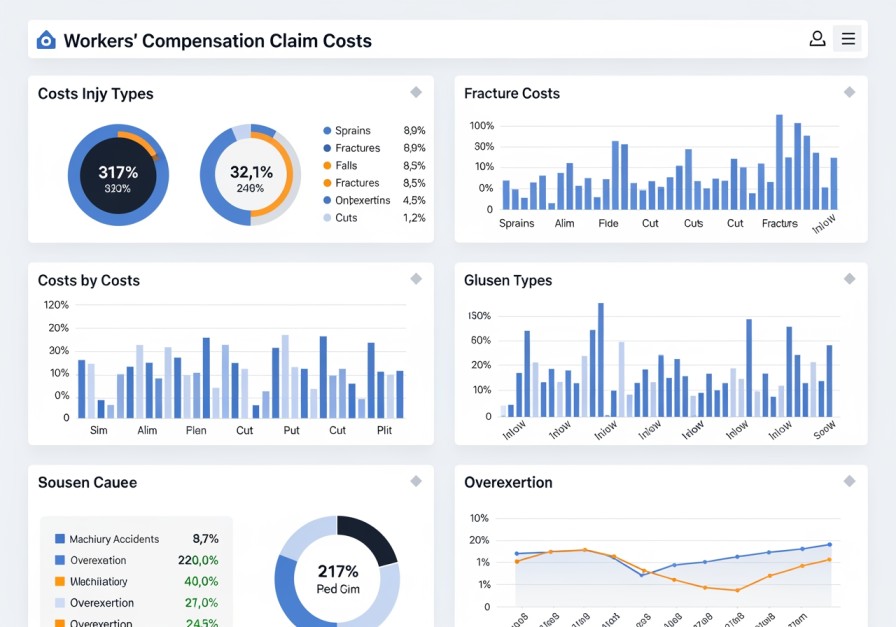
The challenge lies in the sheer volume of data and the subtle connections that determine overall costs. Businesses with regular exposure to worksite injuries face the daunting task of both preventing incidents and managing claims effectively. The National Safety Council (NSC) data reveals that the total cost of work-related injuries was $171 billion in 2019, with an average cost per worker of $1,100. For individual claims, the average cost for all claims combined for accidents that occurred in 2020-2021 was $41,757. These figures underscore the significant financial burden that workplace injuries can impose. For legal professionals seeking to advise clients on managing these costs or pursuing claims, leveraging advanced tools for AI legal research workers’ comp costs can provide an unparalleled advantage.
How AI Legal Research Uncovers Hidden Cost Drivers
AI’s ability to process and analyze large statistical datasets allows us to dissect the average cost of workers’ compensation claims with unprecedented detail. It can identify patterns and correlations that might be invisible to the human eye, revealing the true drivers behind escalating costs.
Consider the average cost of a workers’ compensation claim. While the overall average for 2020-2021 was $41,757, this figure masks significant variations based on the characteristics of the injury. AI can quickly highlight these distinctions:
- Injury Cause Analysis: The way an injury occurs profoundly impacts its cost. According to NCCI data, the most costly lost-time workers’ compensation claims by cause of injury result from motor-vehicle crashes, averaging $89,152 per claim that occurred in 2020 and 2021. Other high-cost causes include burns ($52,161) and falls or slips ($49,971). AI can parse through claim descriptions and incident reports to categorize these causes accurately and provide precise cost benchmarks.
- Injury Nature Analysis: The type of injury sustained is another critical cost determinant. The most costly lost-time workers’ compensation claims by nature of injury are for those resulting from amputation. These injuries averaged a staggering $126,033 per claim in 2020 and 2021. Other expensive injury types include crush, fracture, or dislocation injuries ($62,240), and other trauma ($63,044). AI can quickly identify these injury types from medical records and claim forms, providing a clear picture of their financial impact.
- Body Part Analysis: The specific body part affected also plays a crucial role. Injuries involving the head or central nervous system averaged $94,285 per claim in 2020 and 2021, making them the most costly lost-time claims by part of body. Neck injuries ($65,659) and multiple body part injuries ($62,257) also represent significant expenses. AI’s ability to extract and categorize this information from medical documentation allows for granular cost analysis, helping legal teams understand the potential valuation of a claim based on specific injury characteristics.
By leveraging AI, legal professionals can move beyond general averages and gain a precise understanding of how specific injury characteristics contribute to overall claim costs. This detailed insight is invaluable for negotiations, litigation, and strategic planning for employers and insurers.
Predictive Insights for Proactive Claim Management using AI Legal Research
Beyond analyzing past costs, AI legal research offers powerful predictive capabilities that enable proactive claim management and cost control. It helps businesses and legal teams anticipate future expenses and implement strategies to mitigate them.
One of the most critical distinctions AI helps illuminate is between direct and indirect costs. While direct costs (medical expenses, indemnity payments) are typically covered by insurance, indirect costs are often overlooked but can be far more substantial. A study conducted by Harvard University and the Liberty Mutual Research Institute for Safety revealed that for every one dollar spent on direct Workers’ Compensation costs, about $2.12 goes to indirect costs. These indirect costs include lost productivity, administrative time, training replacement workers, and potential OSHA fines. AI can help quantify these often-hidden expenses, providing a more accurate picture of the true cost of an injury.
The financial impact of workplace injuries on productivity is immense. When an employee is injured, it’s not just about their medical care; it’s about the disruption to operations, the loss of skilled labor, and the potential for decreased morale. AI can model these impacts, showing how different injury scenarios affect a company’s bottom line beyond direct claim payments.
AI also plays a crucial role in fraud detection. Fraudulent workers’ compensation claims are estimated to cost companies around $30 billion per year. AI algorithms can analyze claim data for unusual patterns, inconsistencies, or red flags that might indicate fraudulent activity, helping insurers and employers identify and prevent these costly abuses.
Furthermore, the timing of injury reporting significantly impacts costs. The National Council on Compensation Insurance found that a 2-week delay in injury reporting results in an 18% increase in worker compensation costs. AI can analyze reporting patterns and highlight areas where prompt reporting initiatives could lead to substantial savings.
Return-to-work programs are another area where AI-driven insights can optimize outcomes. By analyzing historical data on similar injuries and recovery paths, AI can help tailor return-to-work plans, identifying suitable modified duties and predicting recovery timelines. This not only benefits the injured worker by facilitating a faster return to meaningful employment but also reduces indemnity costs for the employer.
Finally, state law variations profoundly influence claim costs and management strategies. Workers’ compensation is a state-based system, with each jurisdiction having its own rules regarding benefits, eligibility, and dispute resolution. AI platforms can rapidly compare and analyze these state-specific regulations, helping legal professionals understand how a claim’s valuation or handling might differ across state lines, providing crucial context for multi-state operations or complex cases.
The Evolving Role of Legal Professionals in the Age of AI
The integration of AI into legal research is not about replacing lawyers; it’s about changing their role. Rather than spending countless hours on manual research, legal professionals are increasingly becoming strategists. AI handles the heavy lifting of data collection and initial analysis, freeing up human intellect for higher-value tasks such as critical thinking, client counseling, and complex problem-solving. This shift allows lawyers to focus on the nuances of human interaction, ethical considerations, and the persuasive art of advocacy.

This new paradigm is often described as augmented intelligence, where AI serves as a powerful co-pilot, enhancing human capabilities rather than supplanting them. Lawyers can leverage AI’s insights to build more robust arguments, anticipate counterarguments, and develop more effective litigation strategies. They can present data-driven arguments in court, backed by comprehensive analysis that would be impossible to achieve manually.
However, this evolution also brings important considerations. Ethical considerations surrounding AI in law are paramount. Issues such as data privacy, the transparency of AI algorithms, and the potential for AI bias must be carefully addressed. Legal professionals have a responsibility to understand how these tools work, their limitations, and to ensure their use upholds the principles of justice and fairness.
AI empowers legal professionals to offer more sophisticated and value-added services to their clients. By providing deeper insights, faster turnaround times, and more accurate predictions, lawyers can position themselves as indispensable advisors, navigating the complexities of the legal landscape with unparalleled efficiency and expertise.
Integrating AI into Your Legal Practice
Adopting AI legal research tools is a strategic decision that requires careful planning and execution. It’s not just about purchasing software; it’s about changing workflows and fostering a culture of technological adoption within your firm.
The first step is a thorough needs assessment. What are your firm’s biggest pain points in legal research? Are you struggling with efficiency, accuracy, or the sheer volume of information? Understanding these challenges will guide your selection process.
Next, conduct a comprehensive platform evaluation. There are many AI legal research tools available, each with its own strengths and specialties. Look for platforms that offer intuitive interfaces, robust NLP capabilities, and comprehensive databases relevant to your practice areas. Consider trials or demos to see how the tools perform with your firm’s specific types of cases.
Once a platform is chosen, workflow integration is crucial. This involves seamlessly incorporating AI tools into your existing research processes. It might mean adjusting how research requests are made, how documents are reviewed, or how case strategies are developed. The goal is to make AI an integral, yet unobtrusive, part of your daily operations.
Team training is equally important. Your legal professionals need to understand not only how to use the AI tools but also why they are beneficial. Training should cover the functionalities of the platform, best practices for formulating AI queries, and how to interpret the results critically. This ensures that the technology is acceptd and used to its full potential.
Finally, robust data security protocols must be in place. Legal data is highly sensitive, and any AI platform must comply with strict privacy regulations and industry standards. Ensure that your chosen provider has strong encryption, access controls, and data governance policies.
Here’s a comparison illustrating the shift from traditional to AI-powered research workflows:
Task Traditional Method AI Method Case Law Research Manual keyword searches, reading full cases Semantic search, AI-generated summaries, relevance ranking Document Review Linear review by paralegals Automated categorization, anomaly detection, smart tagging Outcome Prediction Based on experience, intuition, limited data Data analysis of thousands of similar cases, probabilistic models Drafting Documents Manual drafting, template-based AI-assisted drafting, clause suggestions, compliance checks Conclusion: Embracing the Future of Law
The legal landscape is undergoing a profound change, driven by the rapid advancements in Artificial Intelligence. As we’ve explored, AI-powered tools are no longer futuristic concepts but practical realities that are revolutionizing how legal research is conducted, how cases are analyzed, and how legal services are delivered. From understanding the nuanced context of legal language to uncovering hidden cost drivers in complex areas like workers’ compensation claims, AI is proving to be an indispensable asset.
This shift marks a significant step towards the democratization of legal data, making vast reservoirs of information more accessible and understandable. It empowers legal professionals with insights that were previously unattainable, fostering greater efficiency, accuracy, and strategic depth.
Looking ahead, the future trends in legal AI will likely involve even more sophisticated predictive capabilities, improved natural language generation for drafting, and deeper integration across all facets of legal practice. The continuous learning nature of AI ensures that these tools will only become more intelligent and effective over time.
The accept of AI in law is about fostering a powerful human-AI collaboration. It’s about augmenting human intelligence with computational power, allowing legal professionals to focus on their unique strengths—empathy, ethical reasoning, and the art of persuasion—while AI handles the analytical heavy lifting. By understanding and strategically integrating these tools, legal firms can not only steer the complexities of the modern legal world but also lead the way into a more efficient, insightful, and just future.
Leave a Reply